
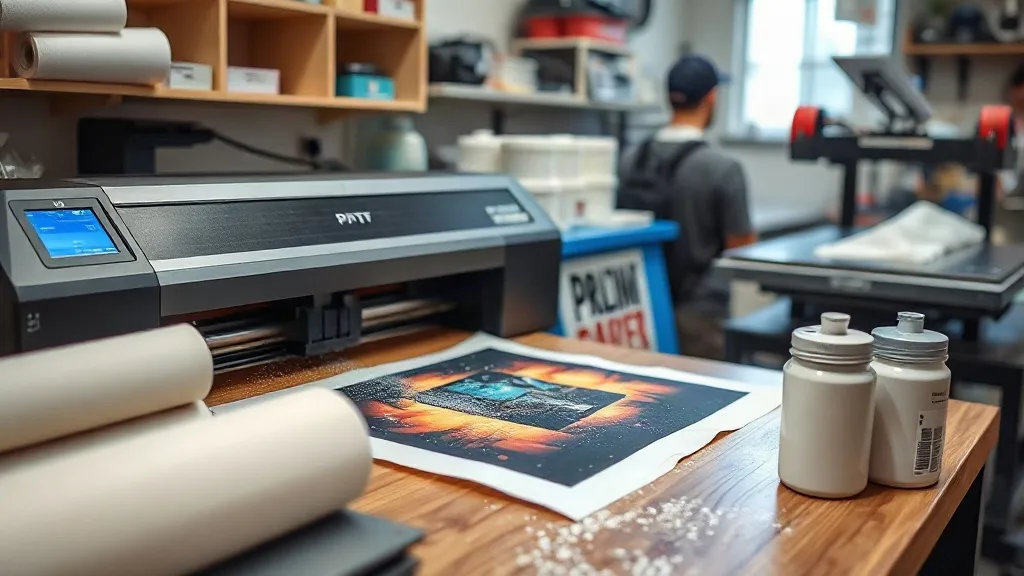
If you run a small print shop, you've probably noticed the growing buzz around dtf transfers. Maybe a competitor started offering them, or a customer asked for a quote on a full-color design that would be a nightmare to screen print. Either way, dtf (direct-to-film) is worth understanding, because it fills a gap that screen printing and heat transfer vinyl can't always cover. This guide is for the shop owner who wants a straight answer: what does DTF actually involve, what does it cost to get started, and where does it fit in a small shop's workflow?
What DTF Actually Is (and Isn't)
DTF printing is a digital process where your design is printed onto a special film, coated with a hot-melt adhesive powder, and then heat-pressed onto a garment. The result is a soft, stretchy transfer that works on almost any fabric, including cotton, polyester, blends, and even nylon. Unlike screen printing, there's no setup per color, so a 12-color photographic design costs the same as a one-color logo. Unlike vinyl, you're not weeding tiny details, which makes it far more practical for complex artwork.
What DTF isn't: it's not a replacement for screen printing on large runs of simple designs. If you're printing 500 white tees with a one-color left-chest logo, screen printing will still be faster and cheaper per piece. DTF shines in the messy middle: small to medium runs, multi-color designs, and jobs where the customer wants a photo or gradient that would be impractical to screen print.
The Equipment You'll Need
Getting into DTF isn't free, but the barrier to entry is lower than you might think. Here's the basic kit:
- DTF printer: A dedicated printer that uses DTF ink and prints onto film. You can convert some inkjet printers, but a purpose-built model is more reliable.
- Powder shaker: Applies the adhesive powder evenly to the wet print. Manual shakers work; automated ones save time and reduce waste.
- Curing oven or heat press: To melt the powder into the ink. A dedicated oven gives more consistent results, but a heat press can work for low volume.
- Heat press: For transferring the finished film to the garment. You probably already have one.
- Film and powder: Consumables. Quality varies, so test before committing to a bulk order.
You can start with a modest setup for a few thousand dollars, or spend more for higher throughput and automation. The key is to match the equipment to your expected volume. Don't buy a $10,000 automated shaker if you're printing 20 transfers a week.
Where DTF Fits in Your Shop's Workflow
Think of DTF as a complement to what you already do. It's ideal for:
- Sample and one-off orders: When a customer wants a single custom shirt with a full-color design, DTF is faster and cheaper than setting up a screen.
- Small batch runs: 12 to 100 pieces with complex art. You avoid the per-color setup and can turn jobs around quickly.
- Hard-to-print fabrics: Polyester, nylon, and blends that don't take plastisol well.
- Photographic or gradient designs: Where screen printing would require halftones and multiple screens.
On the flip side, don't use DTF for large runs of simple designs. The per-piece cost of film and powder adds up, and screen printing will win on price and speed. Also, consider durability: a well-made DTF transfer can last 50+ washes, but poor quality film or incorrect pressing can lead to cracking or fading. Test your process before promising longevity.
Common Mistakes and How to Avoid Them
Most DTF problems come down to a few basics:
- Not controlling moisture: Film absorbs humidity, which affects powder adhesion. Store film in a dry place and use a dehumidifier if needed.
- Inconsistent powder application: Too much powder leaves a stiff, plasticky feel; too little causes poor adhesion. Aim for a thin, even coat.
- Wrong pressing parameters: Temperature, pressure, and time all matter. Follow the film manufacturer's recommendations, and always do a test press.
- Pressing on seams or zippers: DTF needs a flat surface. Use a pressing pillow for tricky areas.
- Ignoring fabric type: Some fabrics (like certain nylons) need lower temperatures. Always test.
Also, don't skip the quality check. Inspect each transfer after curing for gaps or uneven powder. A small flaw becomes a customer complaint later.
Is DTF Right for Your Shop?
If you're a small shop that turns away complex, small-run jobs because they're not profitable with your current methods, DTF could be a smart addition. It lets you say yes to more orders without investing in a full screen-printing setup for each color. But if your business is built on high-volume, simple designs, you might not need it. The best way to decide is to track how many jobs you turn away or lose money on because of color count or fabric type. If that number is significant, DTF is worth exploring.
Frequently Asked Questions
How much does it cost to start DTF printing in a small shop?
A basic setup with a printer, powder shaker, and curing oven can cost between $3,000 and $8,000, depending on the brand and automation level. You'll also need to budget for film, powder, and ink, which are ongoing costs. Start with a modest kit and upgrade as your volume grows.
Can I use DTF on 100% polyester shirts?
Yes, DTF works well on polyester, but you need to lower the pressing temperature to avoid scorching or dye migration. Use a pressing pillow and test on a scrap piece first. Some low-quality polyesters may still experience dye migration, so a blocker film can help.
How durable are DTF transfers after washing?
When applied correctly, DTF transfers can last 50 washes or more without cracking or fading. Durability depends on the quality of the film, powder, and pressing parameters. Always follow the care instructions: wash inside out in cold water and avoid high heat in the dryer.
Do I need a special printer for DTF?
You can convert some inkjet printers to DTF, but purpose-built DTF printers are more reliable and produce consistent results. They're designed to handle DTF ink and film, which can be harsh on standard printheads. If you're serious about offering DTF, invest in a dedicated machine.
What's the difference between DTF and DTG?
DTG (direct-to-garment) prints directly onto the fabric, while DTF prints onto a film that is then transferred. DTF works on more fabric types, including polyester and blends, and doesn't require pre-treatment. DTG is typically limited to cotton and requires a pretreat solution. DTF also allows you to prepare transfers in advance and store them.