
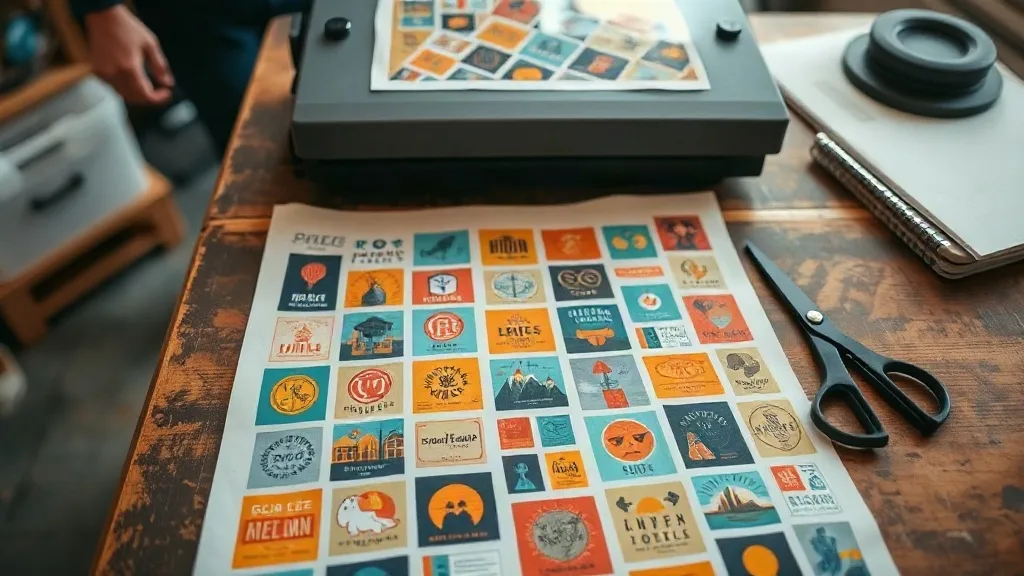
Most print shops quote a transfer job by glancing at the design count and picking a number that feels safe. It works until a customer asks for a mixed order of forty pieces across six designs, and suddenly nobody knows whether the job made money or quietly ate into the week's profit. The fix is not a better gut feeling. It is a proper costing sheet built around a DTF Gangsheet, the layout that decides how much of your film, powder and press time actually gets used.
This guide walks through the numbers a shop owner or press operator needs to turn a gangsheet from a vague cost into a predictable per-piece price. No formulas you cannot run on a clipboard, and no assumptions about volume you do not have.
Why the Gangsheet, Not the Design, Sets Your Cost
A transfer's price is rarely about the artwork itself. It is about how much substrate that artwork occupies on a printed sheet, and what percentage of that sheet ends up on a shirt instead of in the bin. Two designs with identical ink coverage can cost wildly different amounts if one nests tightly and the other leaves a canyon of empty film around it.
That is the core idea behind DTF Gangsheet ordering: you fill a defined sheet area with as many jobs as will fit, then divide the total sheet cost by the pieces you actually get. When you cost per design instead of per sheet, you lose sight of the empty space, and empty space is the most expensive thing in the building.
The three cost blocks on every sheet
Every gangsheet carries three costs, and they behave differently:
- Fixed sheet cost. The film, the print, the powder and the cure. This stays the same whether you fill 60 percent or 95 percent of the sheet.
- Variable press cost. Heat press time, parchment or cover sheet wear, and the operator's attention. This scales with the number of pieces, not the sheet.
- Waste cost. Trimmed margins, misregistered prints, and the seconds you cut slightly too generously around a design.
If you only track the first block, your pricing will look fine on a full sheet and collapse on a half-empty one. The shops that stay profitable are the ones that price the third block honestly.
Building a Per-Piece Cost From a Full Sheet
Start with the invoice for one sheet at your usual size. Divide that invoice total by the number of pieces you can genuinely fit, not the number you fit on your best day. That single adjustment, using a realistic fill rate rather than a perfect one, prevents most of the margin erosion shops see after a few months of gangsheet ordering.
Worked example
Say a sheet costs you a flat amount and you can reliably fit 24 average-size front prints. That gives a raw per-piece transfer cost. Now add press time: if a piece takes 45 seconds of press and handling and your shop's hourly press rate is known, that is roughly three quarters of a minute of labor per piece. Add a small allowance for cover sheets and re-presses on the pieces that need a second hit.
The number you land on is your true transfer cost before garment. It is almost always higher than the first guess, and it is the number you should be quoting from.
Where shops undercount
Three items get left off costing sheets again and again:
- Cutting time. Trimming 24 transfers by hand takes real minutes, and those minutes belong in the price.
- Repress rate. Some percentage of pieces always need a second press. Budget for it instead of absorbing it.
- Sheet failure. A misprint or a powder flaw wastes the whole sheet, not one design. Spread that risk across every piece on the sheet.
Pricing Mixed Orders Without Losing the Plot
Mixed orders are where gangsheet costing earns its keep, and also where it gets messy. A job with one large back print and twenty small chest prints does not divide evenly, because the back print claims a disproportionate share of the sheet.
The cleanest approach is to assign each design a footprint value based on the area it occupies, then allocate the sheet cost in proportion to footprint. A large back print might count as three small chest prints. Once you have footprint values, you can price each design line on the invoice separately while still charging for a single sheet.
Keep a footprint reference sheet
Build a simple table of your common design sizes with a footprint multiplier next to each. Update it whenever you change sheet size or print width. A press operator who can glance at that table and quote a mixed job in two minutes is worth more than any pricing software, because the quote goes out while the customer is still on the phone.
When a Gangsheet Beats Individual Transfers
Gangsheets are not automatically cheaper. They win when your designs are small to medium, when you have enough pieces to fill most of the sheet, and when the designs can nest without awkward gaps. They lose when you have one oversized design that hogs the sheet or a run so small that half the film goes unused.
A practical rule: if you cannot fill roughly three quarters of a sheet with the job at hand, consider holding the order until you have more work to add, or price the empty space into the job openly. Customers accept a small upcharge for a short run far more readily than they accept a surprise delay.
Batching across customers
One of the quieter advantages of gangsheet ordering is that you can combine designs from different customers onto one sheet, provided the turnaround windows overlap. This is how small shops compete with larger competitors on price without cutting their own margin. The key is a shared queue and a clear rule about which jobs are allowed to share a sheet.
Tracking the Numbers Over Time
A costing sheet is only useful if it stays current. Film prices move, your press rate changes when you hire, and your fill rate improves as you get better at nesting. Review the numbers quarterly and adjust your per-piece price accordingly.
Keep a simple log: date, sheet size, designs on the sheet, pieces produced, and actual press minutes. After a few months you will see patterns, like which design types consistently waste film or which sizes take longer to press than expected. Those patterns are worth more than any industry average, because they describe your shop, not someone else's.
Frequently Asked Questions
How do I cost a gangsheet if I only have a few designs?
Cost the full sheet and divide by the pieces you actually produce, then decide whether the per-piece number is acceptable. If it is not, either add more designs to fill the sheet or quote the job as a short run with the unused space priced in. Never divide by a theoretical maximum you did not reach.
Should press time be part of the transfer cost or the garment cost?
Either works as long as you are consistent. Most shops put press time into the transfer cost because it scales with the number of transfers, not the number of garments. The important thing is that it appears exactly once in your pricing, not twice and not zero times.
What fill rate should I assume when quoting?
Use the rate you hit on a normal, unhurried day, not your best layout ever. Many shops find that 75 to 85 percent is realistic once trimming margins and odd-shaped designs are accounted for. Quoting at 95 percent is how margins quietly disappear.
Can I combine orders from different customers on one sheet?
Yes, and many small shops do, but only when the delivery dates line up and both customers are comfortable with the arrangement. Keep a shared queue and a written rule about which jobs can share a sheet so nobody is surprised by a delay.
How often should I recheck my gangsheet costs?
Quarterly is a sensible rhythm, plus any time a supplier changes pricing or you add equipment. A quick review takes under an hour and prevents the slow drift where your quoted price stops covering your actual cost.