
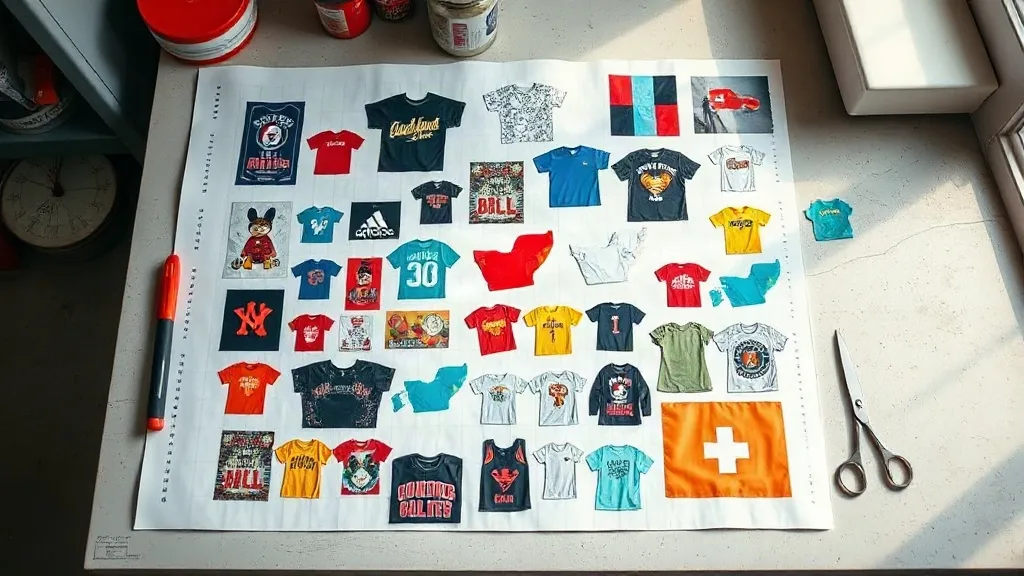
You have a customer who wants twenty shirts with different designs, and they want a price that feels fair. You open your printer software, drop the art in, and hope the layout does not waste film. That guesswork is where margins quietly disappear. A DTF Gangsheet changes the math because it forces you to see cost as a function of space, not as a flat fee per shirt. Once you understand that, pricing becomes a repeatable process instead of a gut feeling.
Why Your Transfer Cost Is Not a Single Number
Most shops price DTF transfers by the piece or by the sheet. Both methods hide the real driver: square inches of film. A 12-inch by 12-inch print sitting alone on a 13-inch by 19-inch sheet costs you the whole sheet. That same print nested with six others costs a fraction of it per unit. The gangsheet is simply the tool that makes that nesting visible and intentional.
When you price from a gangsheet layout, you are pricing from actual material usage. That means you can quote a small run of mixed designs without padding the price to cover waste. It also means you can spot the orders that will lose money before you press the first shirt.
Building a Layout That Protects Your Margin
A profitable gangsheet is not just a full sheet. It is a sheet arranged so that every square inch either holds a sellable print or a small, planned gap for cutting. Here is how experienced operators approach it.
Start With the Largest Prints, Then Fill the Gaps
Place your biggest artwork first. Large prints dictate the grid. Once those are placed, fill the leftover space with small logos, sleeve hits, and neck tags. Those small elements are often the highest-margin items on the sheet because they use space that would otherwise be trimmed away.
Leave a Consistent Cut Margin
If your prints are packed too tight, you will lose time trimming and risk nicking the edge of a design. A consistent margin around each print, usually a quarter inch, keeps cutting fast and clean. The time you save at the trim table is part of your margin.
Group Prints by Fabric and Color
When a gangsheet is going to a single job, group prints by the garment they will be pressed onto. White ink settings and press times can differ between a white tee and a dark heavyweight fleece. Keeping similar jobs together on one sheet reduces setup changes and misprints.
The Cost-Per-Inch Math That Changes Your Quotes
Here is a simple way to see it. Suppose a 22-inch by 24-inch gangsheet costs you a fixed amount from your supplier, including the film and the ink. Divide that cost by the total printable area. That gives you a cost per square inch. Now measure each design on the sheet. A 10-inch by 12-inch back print uses 120 square inches. Multiply that by your cost per inch, and you have the true transfer cost for that print.
Do this once for a typical order and you will immediately see which designs are underpriced. Small left-chest logos often cost you less than a dollar in transfer material, yet many shops charge the same as a full back print. That is free money you are leaving on the table, or a loss you are absorbing without knowing it.
Pricing Small Runs Without Penalizing the Customer
The hardest orders to price are the small, mixed ones. Ten shirts, five designs, two colors. Without a gangsheet, you either charge a setup fee that scares the customer away or you eat the waste. With a gangsheet, you can nest all five designs on one sheet and quote from actual usage.
- Calculate the total square inches of all designs in the order.
- Add a trimming and handling buffer of about 15 percent.
- Compare that to the sheet size you would order.
- Price the job from the sheet cost, not from a per-piece guess.
This approach lets you offer competitive pricing on small runs while still covering your material. It also gives you a clear number to show a customer who asks why a five-piece order costs more per shirt than a fifty-piece order. You are not penalizing them. You are showing them the real cost of space.
When a Gangsheet Beats Ordering Individual Transfers
Individual transfers make sense when you need one design in a single size, or when you are testing a new supplier. A gangsheet wins in almost every other scenario, especially for shops that handle custom apparel with varied artwork. The break-even point is usually around three or four designs. Past that, the nesting efficiency pays for itself.
There is also a workflow benefit that does not show up on the invoice. A single gangsheet arrives as one sheet, which means one trim session, one press setup, and one quality check. That consolidation reduces handling errors. Anyone who has pressed a hundred individual transfers knows how often one goes missing or gets pressed upside down.
Common Pricing Mistakes That a Gangsheet Exposes
Once you start pricing from layouts, a few habits become obvious. The first is charging by the shirt instead of by the print. A shirt with a small logo and a shirt with a full back print are not the same job, and a gangsheet makes that difference visible. The second is ignoring the cost of trimming time. If your layout creates complex cuts, you are paying for that in labor. The third is overfilling the sheet to chase efficiency and then losing prints to edge failures. A slightly less full sheet that presses cleanly is more profitable than a packed one that wastes material.
Frequently Asked Questions
How many designs can I fit on one DTF gangsheet?
It depends on the size of the artwork and the sheet dimensions. A typical 22-inch by 24-inch sheet can hold a mix of six to twelve small to medium prints, or fewer large back prints. The key is to plan the layout before you order so you know the exact square inches used.
Is a gangsheet cheaper than ordering individual DTF transfers?
For orders with three or more designs, usually yes. The savings come from nesting, which reduces wasted film. For a single design in a single size, individual transfers can be simpler and similarly priced.
Can I mix different fabric types on the same gangsheet?
You can, but it is not always wise. Different fabrics may need different press settings, and mixing them on one sheet can complicate your workflow. Group prints by garment type when possible to keep pressing consistent.
How do I price a gangsheet order for a customer?
Calculate your cost per square inch from the sheet price, measure each design, add a small buffer for trimming, and build your quote from that total. Add your labor and profit margin on top. This gives you a defensible price that covers material and time.
Does the gangsheet size affect print quality?
Not directly, as long as your printer and powder application are consistent across the sheet. However, very large sheets require even powder distribution and careful curing. A sheet that is too large for your equipment can lead to inconsistent results, so match the sheet size to your press and oven capacity.