
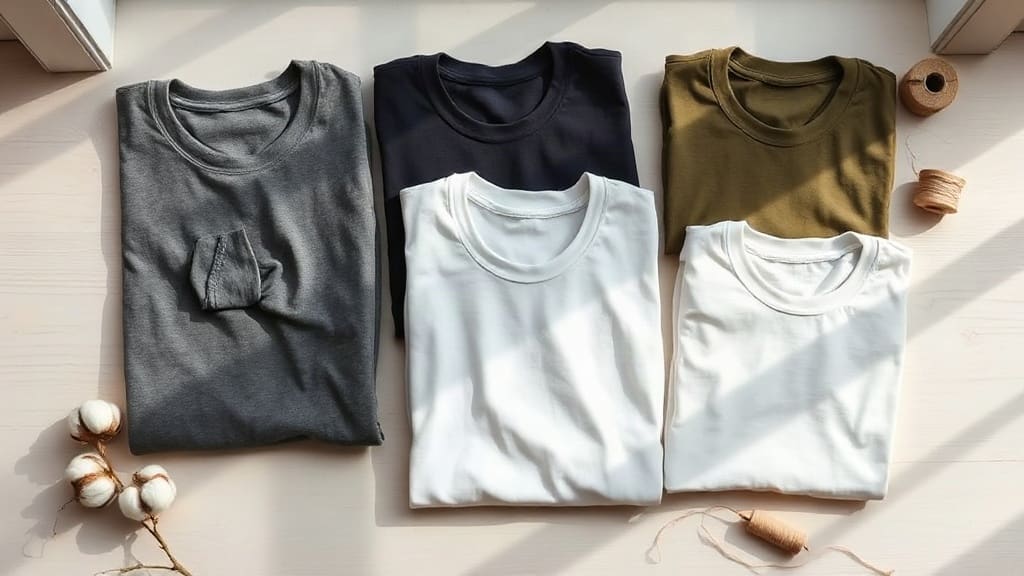
When you slip into a CPS custom premium t-shirt, you feel the difference immediately. The fabric has a weight and softness that cheap blanks simply can't match. Whether you're building a brand, outfitting a team, or creating a personal wardrobe staple, the choice of blank and the method of decoration determine whether your shirt feels like a keeper or a giveaway. In this guide, we'll walk through everything you need to know to produce custom premium t-shirts that people actually want to wear again and again.
Why Custom Premium T-Shirts Matter More Than Ever
The apparel market is flooded with disposable tees that fade, shrink, and lose shape after a few washes. Consumers and corporate buyers are increasingly savvy; they notice when a shirt feels thin or when the print cracks after one cycle. Premium blanks solve these problems at the source. They use longer-staple cotton, tighter knitting, and better dyeing processes. When you start with a superior canvas, every subsequent step, from screen printing to embroidery, yields a more professional result. That's why investing in custom premium t-shirts isn't just about looking good on day one; it's about sustaining brand image and customer satisfaction over time.
Understanding Fabric Quality: The Foundation of Premium Tees
Not all cotton is created equal. The term "premium" gets thrown around loosely, but there are measurable factors that separate a truly high-end t-shirt from a basic one.
Fiber Length and Softness
Long-staple cotton varieties like Pima, Supima, and Egyptian cotton produce yarns that are stronger, smoother, and less prone to pilling. Short-staple cotton, common in budget tees, has more exposed fiber ends that create a rougher hand feel and faster wear. If you want a shirt that stays soft after dozens of washes, look for long-staple or extra-long-staple cotton.
Fabric Weight and Weave
Fabric weight is measured in ounces per square yard (oz/yd²) or grams per square meter (GSM). A standard promotional tee often weighs around 4.5 oz/yd², while premium options range from 5.5 to 7 oz/yd². Heavier fabrics drape better, resist transparency, and hold their shape. However, weight alone isn't everything; the knit structure matters too. A tightly knit interlock or combed ring-spun cotton feels smoother and prints more cleanly than a loose, open knit.
Ring-Spun vs. Open-End Yarn
Ring-spun yarn is made by continuously twisting and thinning the cotton fibers, resulting in a finer, stronger, and softer yarn. Open-end yarn, by contrast, is faster and cheaper to produce but yields a coarser fabric. For custom premium t-shirts, ring-spun cotton is the baseline expectation.
Choosing the Right Blank for Your Project
Once you understand fabric fundamentals, you can evaluate specific blank styles. Here are key considerations:
- Fit: Premium blanks often come in slim, classic, and relaxed fits. Order samples to see how they drape on different body types.
- Color consistency: If you're reordering over time, ensure the supplier maintains dye lots. Slight variations can ruin a uniform look.
- Seams and stitching: Look for double-needle hems, taped neck and shoulder seams, and side-seamed construction. These details prevent twisting and extend garment life.
- Tagless labels: Many premium blanks feature printed neck labels, which are more comfortable and eliminate tag irritation.
Brands like Bella+Canvas, Next Level, and Comfort Colors are popular for good reason, but always test a few options against your specific decoration method and target audience.
Decoration Methods That Complement Premium Blanks
The wrong printing technique can sabotage even the best blank. Here's how to match method to material.
Screen Printing
Still the gold standard for bold, durable graphics on cotton tees. Water-based and discharge inks penetrate the fabric, leaving a soft hand feel that doesn't sit on top of the shirt. Plastisol inks are more opaque and work well on dark colors, but they can feel heavier. For premium tees, water-based printing is often preferred because it maintains the garment's natural softness.
Direct-to-Garment (DTG)
DTG excels for full-color, photographic designs and small batches. On 100% cotton, modern DTG printers achieve vibrant results with a soft feel. However, DTG on dark shirts requires a pretreatment that can slightly stiffen the print area. Always test on your chosen blank.
Embroidery
For logos and text, embroidery adds a tactile, upscale look. It works best on heavier fabrics that can support the stitch count without puckering. Use a quality backing to stabilize the design.
Heat Transfer and Vinyl
These methods are cost-effective for small runs and personalization. However, they may not match the durability of screen printing on premium tees. If longevity is a priority, consider other options.
Design Principles for Custom Premium T-Shirts
A great design respects the garment. Here are practical guidelines:
- Keep it simple: Overly complex designs can look cluttered and may not reproduce well. Bold, clean graphics often have more impact.
- Consider placement: Left chest, full front, back, and sleeves each serve different purposes. Think about how the shirt will be worn and what message you want to convey.
- Use the right colors: Contrast is key. On dark shirts, light inks pop; on light shirts, dark inks are crisp. Avoid low-contrast combinations that strain the eyes.
- Test before you commit: Always order a sample or proof. What looks good on screen may not translate to fabric.
Sourcing and Quality Control
Finding a reliable supplier for custom premium t-shirts involves more than comparing prices. Ask for fabric specs, certifications (such as OEKO-TEX or WRAP), and samples. Check for consistency across multiple pieces. Inspect seams, print adhesion, and color accuracy. A good supplier will stand behind their product and offer reprints or refunds if something goes wrong.
When you work with Buy Smart Blanks, you gain access to a curated selection of premium blanks and expert guidance on decoration. We help you navigate the options so you can create shirts that impress.
Care Instructions to Preserve Premium Quality
To keep custom premium t-shirts looking their best, advise end users to:
- Wash inside out in cold water.
- Avoid bleach and fabric softeners, which can break down fibers and inks.
- Tumble dry low or hang dry.
- Iron inside out, avoiding the printed area.
These simple steps can significantly extend the life of the garment and the print.
Frequently Asked Questions
What makes a t-shirt "premium" compared to a standard one?
Premium t-shirts typically use longer-staple cotton, ring-spun yarn, and heavier fabric weights (5.5 oz/yd² and up). They also feature superior construction details like side seams, taped necks, and double-needle hems. These factors contribute to better softness, durability, and printability.
How do I choose the right printing method for my custom premium t-shirts?
Consider your design complexity, quantity, and desired feel. Screen printing is ideal for bold, long-lasting graphics on larger orders. DTG works well for detailed, full-color designs in smaller batches. Embroidery suits logos and text. Always test on your chosen blank to ensure compatibility.
Can I mix different sizes and colors in a small order?
Many suppliers offer flexible ordering, but minimums vary. Some premium blank distributors allow mixed sizes within a color, while others require case quantities. Check with your supplier before finalizing your order.
How can I ensure color consistency across reorders?
Request dye lot information and specify that future orders match the original lot. Work with a supplier who understands the importance of consistency and can reserve inventory for you.
What is the best way to care for custom premium t-shirts?
Wash inside out in cold water, avoid bleach and fabric softener, and tumble dry low or hang dry. Iron inside out if needed, and never iron directly on the print. Following these steps will help maintain both fabric and print quality.