
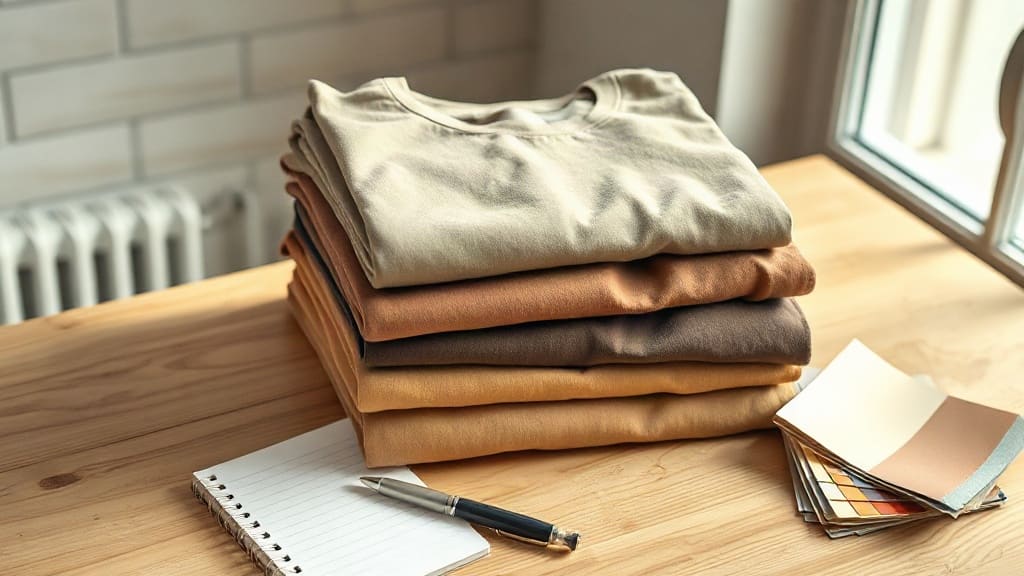
Anyone who has ordered blank apparel in bulk has run into the same quiet problem: three suppliers, three very different quotes, and no obvious way to tell which one is actually the better deal. That is where CPS comes in. In the bulk apparel world, CPS stands for cost per shirt, a simple benchmark that turns a messy pile of line items into one number you can compare across vendors. It is the metric that separates buyers who get burned by hidden fees from buyers who know exactly what they are paying before the invoice arrives.
What CPS Means for Custom Premium Shirts
Strip away the jargon and CPS is just total order cost divided by the number of usable shirts you receive. The catch is the word "usable." A quote that looks cheap per unit can quietly become expensive once you account for misprints, short counts, and shirts that do not survive the first wash.
Consider a real scenario. A screen printer quotes you $6.40 per shirt on a 144-piece order of premium blanks. A second printer quotes $7.10. On paper the first looks like the winner by nearly $100. But the first quote excludes setup fees, and the second includes a pre-production sample plus a written misprint allowance. Once you factor those in, the gap shrinks to almost nothing, and the second vendor is the safer bet for a client-facing order.
Why CPS Matters More Than Sticker Price
Sticker price is what a supplier advertises. CPS is what you actually pay. For anyone ordering custom premium shirts at volume, whether for a brand drop, a company event, or a retail line, that distinction is the difference between a healthy margin and a slow bleed.
- A single hidden setup fee can add $0.20 to $0.60 per shirt on small runs.
- Short counts of 2 to 4 percent are common and rarely refunded automatically.
- Misprints on a 100-piece run can push effective CPS up by 5 percent or more.
- Shipping and duties are frequently quoted separately and can swing the total by double digits.
How to Calculate CPS Accurately
The formula itself is easy. The discipline is in what you include. Use this structure every time you evaluate a quote:
- Add the base garment cost multiplied by the order quantity.
- Add decoration charges (printing, embroidery, tagging, folding).
- Add setup, screen, or digitizing fees, divided across the run.
- Add freight, duties, and any rush surcharges.
- Subtract the cost of shirts you cannot sell or use.
- Divide the result by the number of sellable shirts.
That final number is your true CPS. It is also the number you should write at the top of every quote comparison sheet, because it is the only figure that travels fairly between vendors.
A Worked Example
Say you order 200 premium tri-blend tees at $4.80 each. Decoration runs $2.10 per shirt. Setup is a flat $120. Freight is $180. You expect about 4 percent loss to misprints and short counts, meaning roughly 192 sellable shirts.
Total cost: $960 + $420 + $120 + $180 = $1,680. Divide by 192 and your CPS is $8.75. If you had naively used the quoted $6.90 per shirt, you would have under-budgeted by nearly $1.85 per unit, or $370 across the order.
Choosing Blanks That Protect Your CPS
Here is the part most buyers miss: the blank you choose shapes your CPS long before the printer touches it. A premium shirt that holds its shape and color after ten washes has a lower real cost than a cheap shirt that fades, shrinks, or pills, because you are not replacing it, refunding it, or losing a customer over it.
When evaluating blanks for custom premium shirts, check these attributes:
- Fabric weight: 4.3 to 5.5 oz is the sweet spot for retail-feel tees that survive repeat wear.
- Stitch density: Denser stitching at the shoulders and hem signals a longer lifespan.
- Dye consistency: Ask for a swatch from the current production batch, not a catalog photo.
- Shrinkage rate: Anything above 5 percent will distort your size curve and inflate replacement costs.
- Tag options: Tear-away or custom woven tags affect perceived value and your decoration line item.
A blank that costs $1.20 more per unit but lasts twice as long can drop your effective CPS by 30 percent or more over the life of a garment program. That is the kind of math that matters when you are ordering for a brand, not a one-off event.
Premium Does Not Mean Expensive
Premium is a quality tier, not a price tier. Plenty of mid-weight combed cotton and tri-blend blanks deliver the hand feel, drape, and durability that customers associate with premium, at prices that keep CPS in a workable range. The goal is to match the blank to the use case, not to buy the most expensive option on the shelf.
Common Mistakes That Inflate CPS
Even experienced buyers fall into the same traps. Watch for these:
- Comparing quotes at different quantities. Unit pricing drops at volume breaks, so a 144-piece quote and a 500-piece quote are not comparable.
- Ignoring decoration minimums. Some printers charge per-color minimums that spike CPS on small runs.
- Overlooking size upcharges. Extended sizes often cost $1 to $3 more per shirt, which distorts the average.
- Skipping the sample. A $40 sample that reveals a bad fit or a weak print saves thousands in reprints.
- Forgetting storage and fulfillment. If you warehouse inventory, those costs belong in your CPS too.
Each of these is easy to fix once you know to look for it. Build them into your standard quote template and you will stop being surprised by final invoices.
Frequently Asked Questions About CPS and Custom Premium Shirts
What does CPS stand for in bulk apparel ordering?
In bulk apparel, CPS stands for cost per shirt. It is the total landed cost of an order, including garments, decoration, setup, freight, and expected loss, divided by the number of sellable shirts. Buyers use it to compare quotes from different suppliers on equal footing.
How do I lower my CPS without sacrificing quality?
Order at volume breaks, consolidate decoration into fewer colors or locations, choose a mid-weight premium blank instead of a heavyweight one, and negotiate misprint allowances into the contract. Each of these reduces CPS without downgrading the finished product.
Is CPS the same as unit price?
No. Unit price is the quoted cost of one shirt before fees and losses. CPS is the real cost after everything is included. The two can differ by 20 to 40 percent on small or complex orders, which is why unit price alone is a poor basis for comparison.
How many extra shirts should I order to protect my CPS?
A common rule is to add 3 to 5 percent overage for standard runs and 7 to 10 percent for complex multi-location decoration. This covers misprints and short counts without leaving you with a pile of unusable inventory.
Does the blank choice really affect CPS that much?
Yes. A durable premium blank with low shrinkage and consistent dye reduces replacements, refunds, and reprints. Over a multi-season program, that can lower effective CPS by a meaningful margin compared to a cheaper blank that fails early.
Once you start tracking CPS on every order, quoting and buying custom premium shirts stops being a guessing game. You get a single, honest number that tells you whether a deal is actually a deal, and you can put that number to work the next time a supplier slides a quote across the table.